Sunday, August 9, 2026

Anahita, water goddess


Anahita /ɑːnəˈhiːtə/ is an Iranian goddess. She is praised in the Aban Yasht, one of the Zoroastrian hymns contained in the Avesta, under the name Aradvi Sura Anahita (Arədvī Sūrā Anāhita). In Middle Persian, her name was rendered Ardwisur Anahid.

She is thought to have developed from an Indo-Iranian divinity of the mythical river which is the source of all the waters of the world.

Characteristically for a water divinity, Anahita is associated with fertility, procreation, and wisdom. Like the Indian Sarasvati, Anahita nurtures crops and herds; she is hailed both as a divinity and as the mythical river which she personifies, "as great in bigness as all these waters which flow forth upon the earth" (Yasht 5.3). In the Aban Yasht, she is depicted as a "beautiful strong maiden, clad in beaver skins, who drives a chariot drawn by four horses—wind (vayu-), rain, cloud and sleet." She is also connected with luxuries like horses, chariots, weapons, and household goods, and it is said that warriors prayed to her for victory. The Greeks identified Anahita with several of their own goddesses; most frequently, they viewed her as the Persian Artemis.

The cosmological qualities of the world river are alluded to in Yasht 5, but properly developed only in the Bundahishn, a Zoroastrian account of creation finished in the 11th or 12th century CE. In both texts, Aredvi Sura Anahita is not only a divinity, but also the source of the world river and the (name of the) world river itself. The cosmological legend runs as follows:

All the waters of the world created by Ahura Mazda originate from the source Aredvi Sura Anahita, the life-increasing, herd-increasing, fold-increasing, who makes prosperity for all countries. This source is at the top of the world mountain Hara Berezaiti, "High Hara", around which the sky revolves and that is at the center of Airyanem Vaejah, the first of the lands created by Mazda.

The water, warm and clear, flows through a hundred thousand golden channels towards Mount Hugar, "the Lofty", one of the daughter-peaks of Hara Berezaiti. On the summit of that mountain is Lake Urvis, "the Turmoil", into which the waters flow, becoming quite purified and exiting through another golden channel. Through that channel, which is at the height of a thousand men, one portion of the great spring Aredvi Sura Anahita drizzles in moisture upon the whole earth, where it dispels the dryness of the air and all the creatures of Mazda acquire health from it. Another portion runs down to Vourukasha, the great sea upon which the earth rests, and from which it flows to the seas and oceans of the world and purifies them.


Tuesday, April 21, 2026

You Fly Free


You fly free on the wings of mourning doves,

of squawking gulls and chickadees,

of bald eagles and black crows,

of mother ducks and Canada geese;

you will sing with the peepers,

you will swim in the sea,

you will swirl with the tides,

your presence is all around me.

Tuesday, September 2, 2025

Foghorn in Little Lorraine

Little Lorraine Foghorn

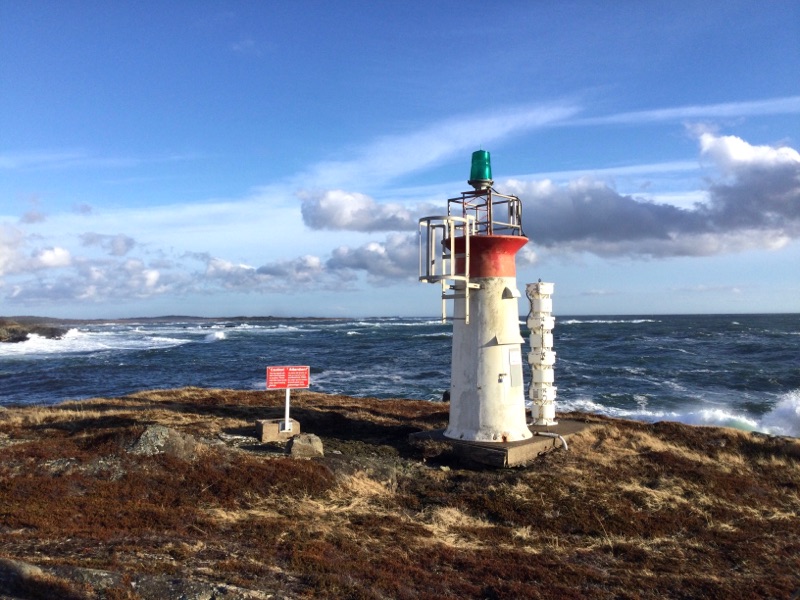
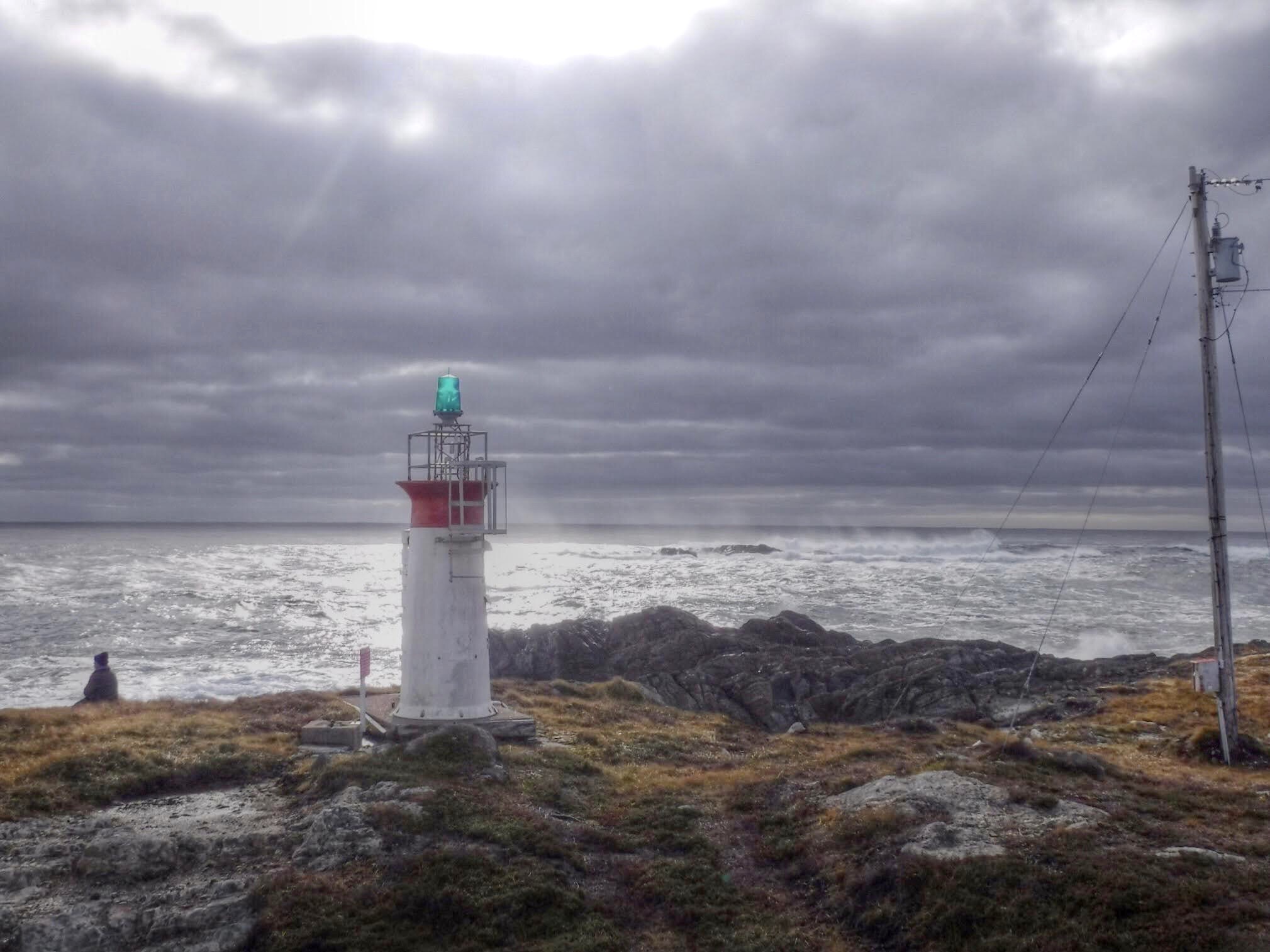
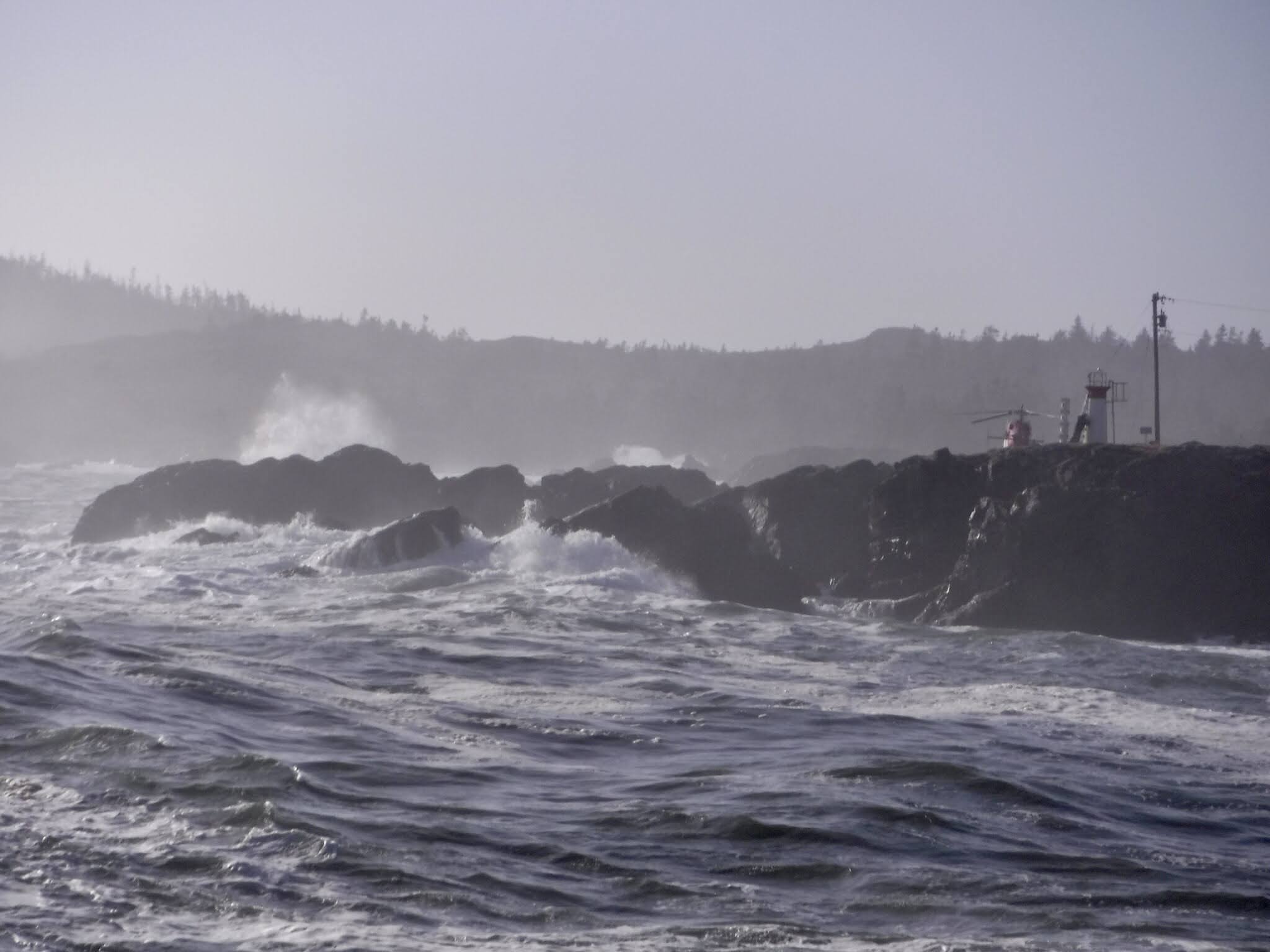
 Continuing the friendly banter from Adam Baldwin's fabulous concert at the Louisbourg Playhouse, I decided to post a few pictures taken over the years of our Foghorn in Little Lorraine, aka Lighthouse.


From our oceanfront house we look straight out across the cove to the foghorn on the western headland entrance to Little Lorraine Cove. Late in 2023 our foghorn had a functioning bright green light. This was installed when the Federal "Ministry" swooped in by helicopter supposedly to re-activate the defunct foghorn blare. For a day or two, the piercing loud-pitched hum went off intermittently for a few seconds at a time (though there was no fog to be seen!) before getting stuck on for a good hour late one night.

Weeks later, in January 2024 a bright red helicopter carrying pilot and mechanic swooped in three times to fix the problem but succeeded in merely posting a sign warning of a possible sudden burst of loud noise, which has never since come to pass. The green light failed when a storm took out the power which has never been restored. Despite all this we love our sentinel foghorn in Little Lorraine.

You in Louisbourg have your imposing lighthouse recently spruced up for its 100th anniversary (in current incarnation) to the tune of a couple of million; we in Little Lorraine make do with an occasional ceremonial helicopter swoop-in for our fittingly diminutive, dysfunctional, neglected almost forgotten foghorn surrounded by raw wild nature.

Tuesday, October 1, 2024

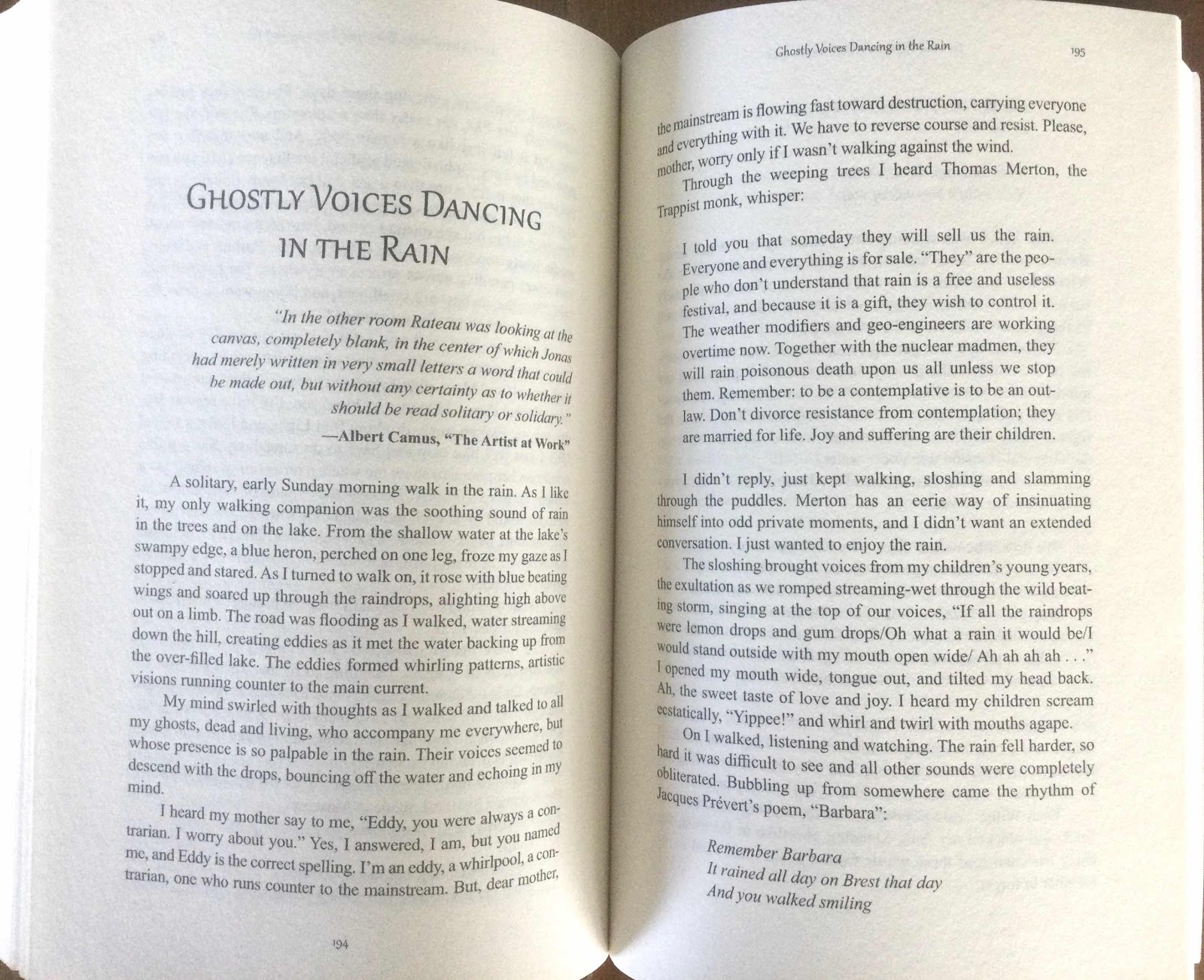
Ghostly Voices Dancing in the Rain

A short and sweet essay by Ed Curtin, from his collection Speaking Truth in a Country of Lies


Sunday, October 22, 2023

Pass The Feather


In a sharing circle
pass the feather,
speak words of conciliation.
Expand your horizons,
open up your heart,
bleed, shed a tear,
share in the sorrow.
Come together in embrace,
heal in love and peace.
Imagine our solid bond,
one to another,
to another, to another....

*******


The circle influences how Indigenous people view the world. That is, how all things are connected. Balance relies on this connection and without balance, health is compromised.

Everything in circles; cycles. The sun, the moon, the seasons, the journey of our lives from birth to death. Circles are a natural way to walk your path and conduct your life and align with the fundamentals of the natural world.

Indigenous ways of knowing use and interpret the circle in many different ways but with the same good intentions. The medicine circle (wheel) is used as a diagram for everything from the four directions, a path to health and wellness, the connection between the human races of Mother Earth as well as the cycles of life, seasons and medicines.

The circle is whole and doesn't end; the circle can be unbalanced depending on what is in it or not in it. But in general, a circle is impartial, fair and representative of inter-connectivity and equality.

www.passthefeather.ca

Wednesday, May 31, 2023

Below The Sierra


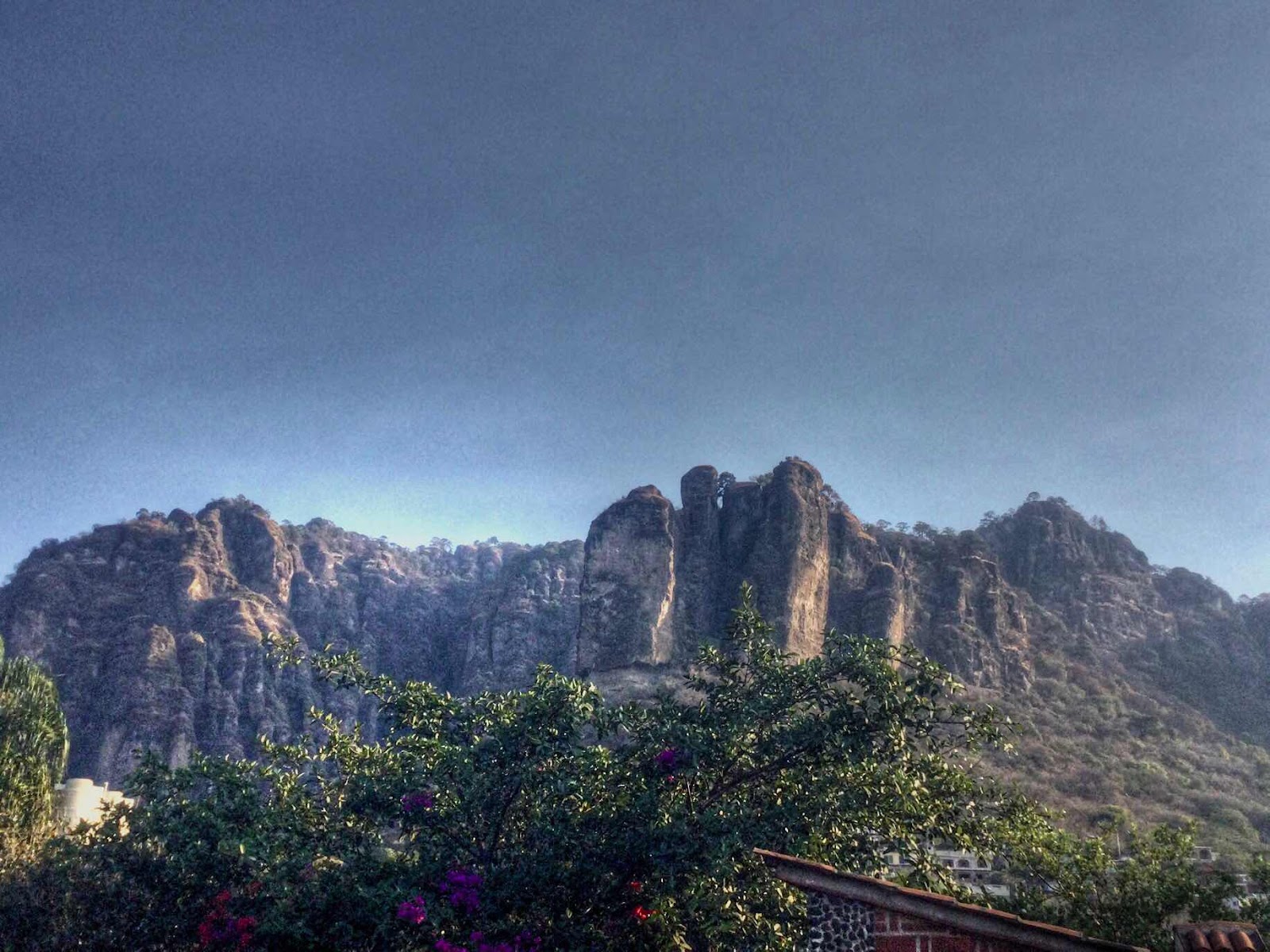
Majestic Sierra de Tepoztlán,
twenty million years in the making
openly embracing indigenas, conquistadores, 
now faces acquisitive globalist undertakings.

Old man volcano Popocatepetl
fumes, he threatens to all-out blow;
the Earth may shake and rattle and slide,
ashes rain down and lava flow.

These mountains will as always survive,
Nature, stirred and flushed, will recover,
human hands will re-build from ruins once more,
this land will remain on guard, abiding forever.

Saturday, May 20, 2023

Tepoztlán - Myths & Mountains


Margarita Vargas Betancourt writes in Legend of the Tepozteco - Mesoamerican and Catholic Mythology: "The legend of the Tepozteco is a perfect example of the syncretism that characterizes Mexican folklore. Catholic influence is as obvious as pre-Hispanic impact. The immaculate conception of the Tepozteco recalls the marvelous birth of the Hero twins (as told in the Popul Vuh, the story of creation of the Maya), but also that of Jesus in the New Testament."
She concludes her thesis: "The legend also discloses the process by which two mythologies have come together into Mexican folklore: Mesoamerican and Catholic mythologies. The stories of Tepozteco, the Popol Vuh Hero twins, Mixcoatl-Camaxtli, Quetzalcoatl, Huitzilopochtli, and even those of Jesus and Moses have several things in common: a miraculous conception, a confrontation, and a peregrination. It is very likely that these elements are universal. However, there are several “authentic” Mesoamerican characteristics in the legend of the Tepozteco. First of all, Tepozteco was a trickster. He was a trickster-hunter like Hunahpu, Xbalanque, and Mixcoatl-Camaxtli. He is reminiscent of Quetzalcoatl, because like him, Tepozteco embodies the forces of wind and water. His final association with Mesoamerican cosmovision is that he is one of the four hundred pulque gods that are related to the mountains of the region, to the agricultural cycle, and to the astronomical phenomenas of ancient Mexico."


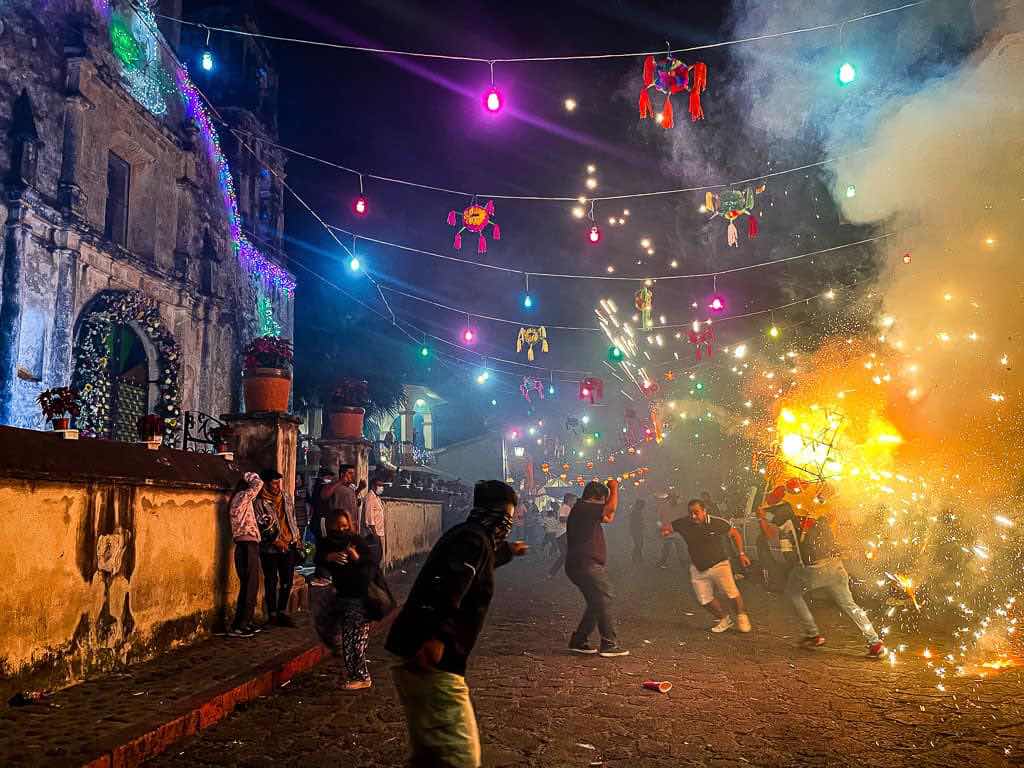
Firecrackers galore, outside the church

Tepoztlán carries the legend of Tepozteco, its pre-hispanic past and its Catholic heritage with fiery pride as can be seen by the celebration of religious festivals and spiritual rituals, the vibrant murals adorning town walls, the regular community and barrio fiestas, firecrackers and all. The pueblo preserves a communal system of land use that was established in the early colonial period. This system is recognized under the 1917 Mexican Constitution, under the name 'communal'. It is similar to, but not the same as, the ejido designation, which has caused headaches for many foreigners looking to buy property. This makes the municipality proud and resistant to change from outside interests, especially well-heeled ones. The community famously twice voted down golf courses proposed by wealthy developers. Tepoztlán is the only municipality in Mexico with a law expressly prohibiting their establishment. Multinational chains like Starbucks, McDonalds, Burger King have been kept at bay, as has the otherwise ubiquitous Mexican supermarket chain Oxo, while pulque, mezcal, tequila, cerveza are readily available along with a rich variety of local produce and cuisine, with some dishes dating back to pre-hispanic days. This is a community where each barrio, or neighbourhood, and neighbouring pueblo is serviced by regular minibus combi public transit - every ten minutes! People work hard, spending long days growing and making products and selling them at market or in tiny stores. They also celebrate heartily and welcome crowds of marauding visitors from the big city on weekends and holidays.


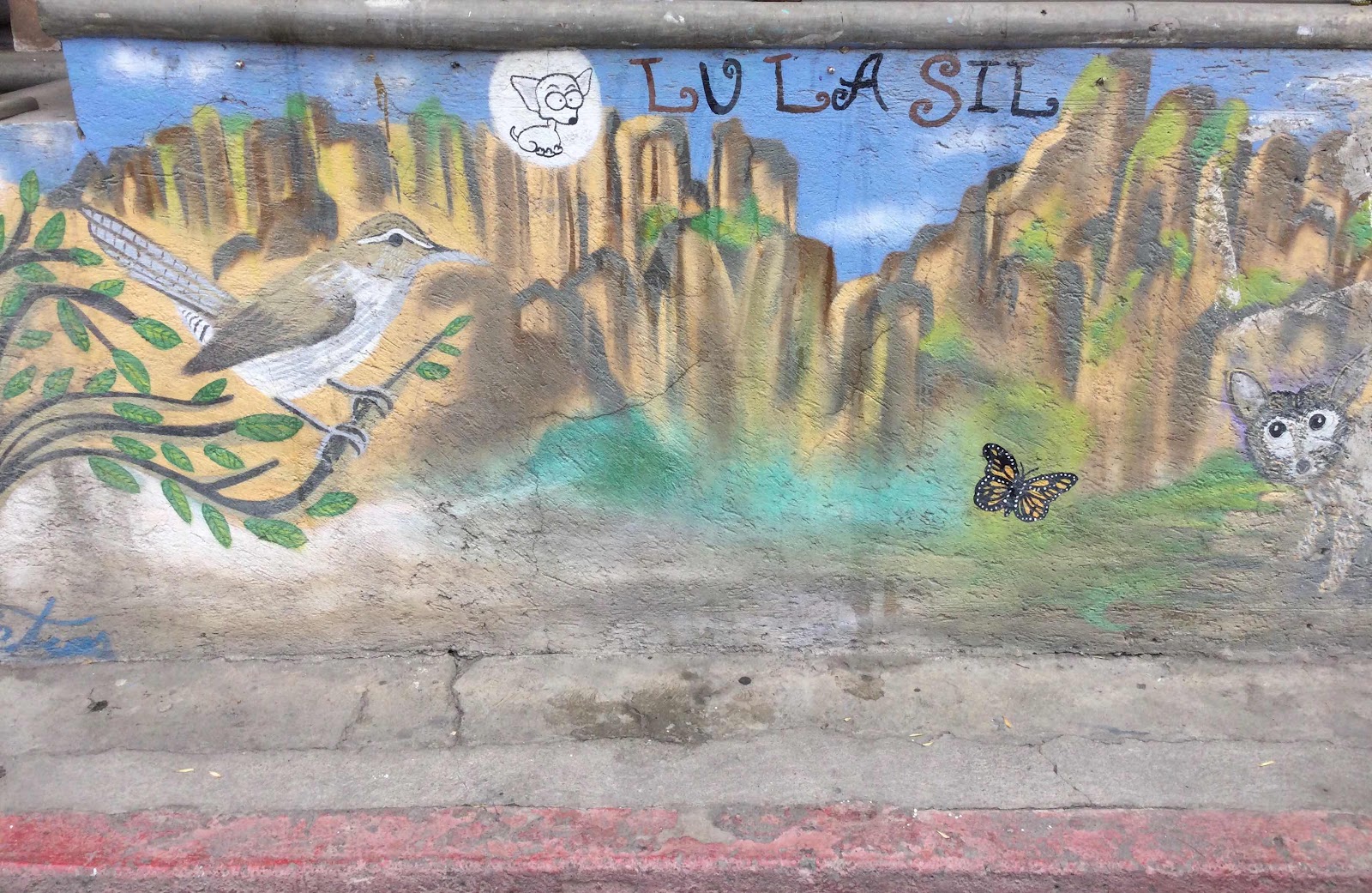
One of countless murals depicting a cosmovision

Tepoztlán has been traditionally a proudly campesino (small-scale) farming and local market community. Its State of Morelos is, after all, the birthplace of the revolutionary Emiliano Zapata, founder of the land-rights Zapatista movement. Eyes were opened when anthropologist Robert Redfield published the book “Tepoztlán, a Mexican Village: A Study of Folk Life” in 1930, painting the village as an idyllic contrast to modern life. Redfield lectured at the University of Chicago on the folk society, which he saw as "essentially a stable, isolated extended family". The first expats and tourists were not long in treading a path to Tepoztlán. A highway connecting it to Cuernavaca, a little over a half-hour drive west, in the 1940s allowed tourism to begin in earnest. Now an express toll highway linking Mexico City with Acapulco and the Pacific coast skirts the town. Luxury hotel chains are still nowhere to be found. There is not even a hospital in this pueblo of 14,000 in a municipality of 55,000. They turned that down too. There is a health centre, clinics, spas, yoga and meditation centres, health treatments of all kinds, including plant (maguey, nopal, huitlacoche, mushrooms) and psychedelic (iboga, ayahuasca, psylocibin) medicines. In this semi-arid region of Mexico are more than 3500 species of plants that have been identified and used as natural alternatives to treat different ailments and have been used through the years as traditional medicinal agents and that practice and knowledge have been passed down from generation to generation. For a fullsome inventory, visit
https://www.aztlanherbalremedies.com/collections/mexican-herbs.
Temazcals, a type of low-heat sweat lodge, are widespread here. They originated with pre-Hispanic Indigenous peoples in Mesoamerica. The term temazcal comes from the Nahuatl word temāzcalli.


Medicinal herbs at the market

As written elsewhere (https://natureasmuse.blogspot.com/2023/05/pulque-nectar-of-gods.html), I have been enjoying the local home-made tangy, creamy pulque, made from the fremented sap of the maguey (agave). On our way to find artemesia absinthium (wormwood) at the market to quell a two-day high temperature, we came across a well-stocked homeopathic pharmacy in town. I bought some artemisia drops along with the recommended pomegranate tincture to complement it. We have also been drinking the refreshing te de jamaica (hibiscus flower tea) as a digestive. Gundi snagged a combination arnica/rhus tox (homeopathic poison ivy) cream to settle an itchy rash on her leg. One afternoon, after sampling my pulque, in viscous combination with sparkling mineral water, she lay down after being ministered an hoja santa tea, picked from the garden here by Angelina, our 'Juanita', who swears by it for an upset tummy, that Mexicans seem to know all about. Ten minutes later she perked up, stomach fine again, and I too recovered! For more on hoja santa, see https://www.thespruceeats.com/hoja-santa-mexican-herb-2342959. Thanks to our friend Alfredo, we have a new discovery - he picked and brewed a pink bougainvillea flower tea to quell a stubborn cough.

Unfortunately for us, the mountain trails all around Tepoztlán are closed at present, a seasonal hazard of extended hot, dry conditions that makes forest fires an extreme hazard. Maybe a good thing for seniors like us, but one we would like to have experienced is described by AllTrails thus: "This trail begins from the tiny village of Amatlán de Quetzalcóatl, just east of downtown Tepoztlán. This route is said to pass through a portal of positive energy, as it ascends to a lookout point on top of the mountain Tlamanco, which is considered to be a place of religious offering, as well as boasting amazing views. Towards the end of the trail, there is a short bit of a rocky climb, where you need to put your hands and feet in holes in the side of the cliff. Prehispanic petroglyphs may be visible along the trail. The route passes by "La Puerta," a spiritual retreat center." AllTrails has 60 scenic trails in the Tepoztlán area. See https://www.alltrails.com/mexico/morelos/tepoztlan.

Tepoztlán and its breathtaking surrounds are a magical gem, symbolized best by its enveloping cloak of monumental peaks that maintain their Nahuatl names, like Tlacatepetl, Tepoztecatl, Cuaxohualoltzin, Topiltzin, Ehecatepetl, Tlahuitepetl... This is an enduring, resilient place and people, built on myth and mountains, cultures and beliefs, food and farming. There's an energy around here - they call it la vida.