
First comes the ploy,
then the narrative spin.
Revelation scatters the pigeons
and revisionism rushes in.





If pictures could tell stories...
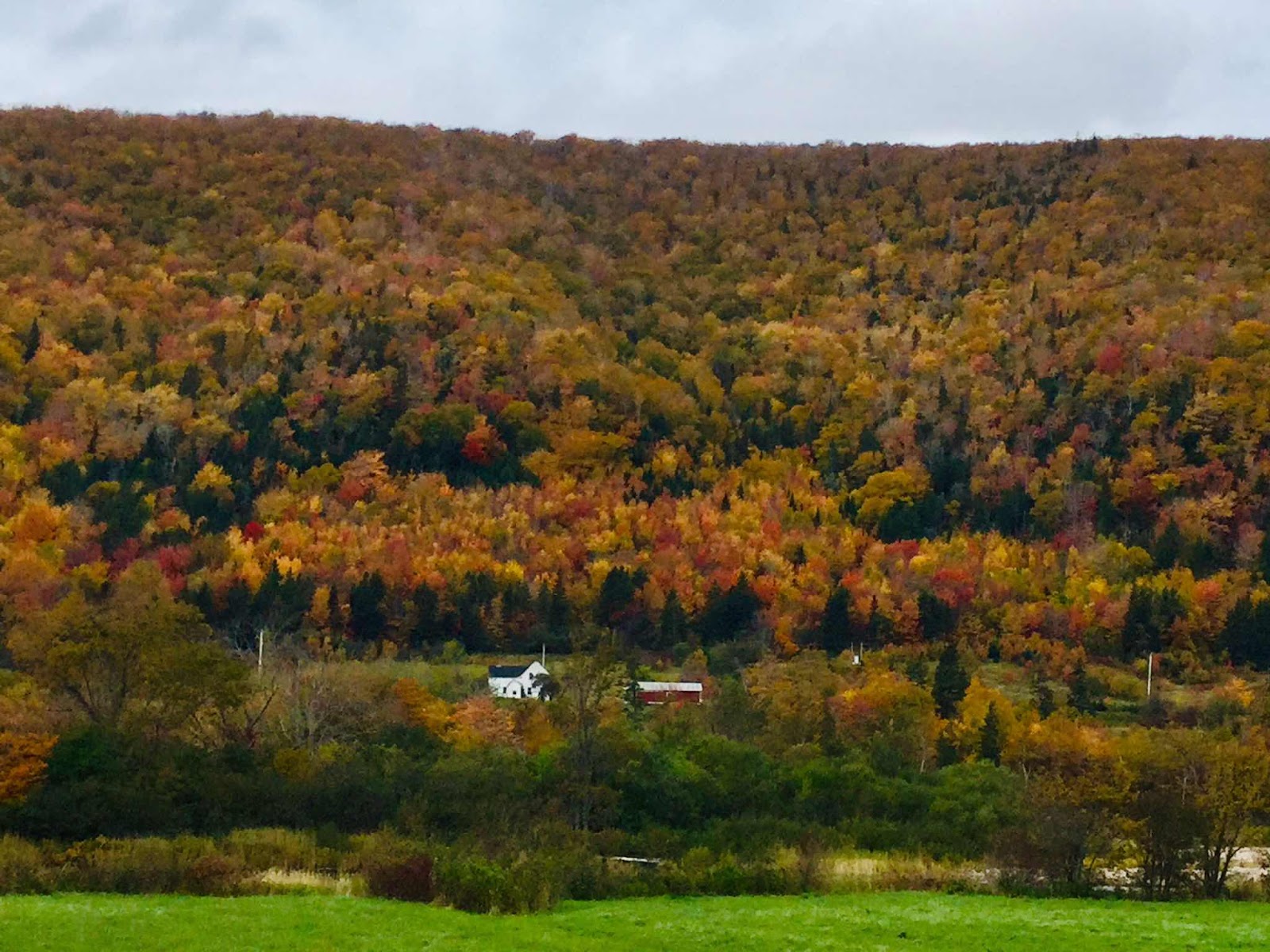
then I would love to hear the history of this white farmhouse, located right off the Cabot Trail in the lower Margaree Valley, just south of Fordview. The views across the broad river valley are sumptuous, especially with a full colour array of fall foliage. The sculptured old apple tree laden with plump red fruit raises her outstretched arms skyward as if in proclamation, perhaps in anguish.

The river glides on by as it has always done in its patient path to the embracing sea. One would never guess from the far vantage point over the other side of the valley toward the house that it now stands abandoned, in disrepair, moulding, sagging, fraying, creaking. The mountainsides it is sheltered by stand sturdy, strong, ablaze with autumnal vigour.
What merriment rang out in the dining room in Thanksgivings and Christmases past? What joy was beheld by the pastoral prospects? What spirited ghosts inhabit the wood-panneled bedrooms? What foods did they grow and what animals roamed the barnyard?
The bumpy backroads of Margaree (and the length and breadth of Cape Breton Island beyond) lead past many such homesteads entangled in vegetation and throttled by trees, soon to be swallowed up entirely, reverted to wild land, almost without trace of the stories they could tell.

At the end of our twelve-week stay in Guatemala this winter, we stayed for three days at the lovely Hotel Bambú, nestled in splendid owner-designed gardens on the bay on the edge of Santiago Atitlan. The hotel was founded in the early 1990s by José Ramón de Castro, who originates from Vigo, in Galicia, Spain. As we were departing, two close friends of José were saying their goodbyes after a weekend visit. We were awaiting our tuk-tuk taxi, headed for the lancha to take us across Lake Atitlan to Panajachel, thence by minibus to Antigua. Jose's friends invited us to travel direct to Antigua with them in their Jeep. Perfect - yes please!
Our route took us for our first time on the southern "coastal" road via San Lucas Toliman south along a well-paved stretch downhill through coffee plantations, majestic trees, and open green grasslands before turning east to Escuintla on a terribly bumpy and potholed divided road reminiscent of Cuba with its vast tracts of sugar cane and associated processing plants. The bustling town of Escuintla reveals more modern dress among the locals than the traditional Mayan costumes we are used to seeing on Lake Atitlan and in Antigua. Having negotiated our way through the busy streets entirely lacking signage, we headed north and up past towering volcanoes on the last stretch, the highway to Antigua.
With little warning, the otherwise smooth road kinked and became a twisted surface of dusty ash and gravel, a grey moonscape. We were crossing the wide river valley where rainy season torrents bring down heavy precipitation. This landscape has, however, been transformed by the cataclysmic eruption of Volcan Fuego in a massive surging pyroclastic flow over 20 kilometres in length on the morning of June 3 last year. Pyroclastic flows are hot, fast-moving avalanches of ash and rock debris of all sizes, that wipe out everything in their path. The height of the ash plume first rose to an unusual 10+ kilometres, then decreased to 5 - 6 kilometres for most of the eruptive phase. There was no warning of the ferocity and speed of this monumental event. According to our hosts, La Reunion golf course ordered evacuation by 11am. Two towns, El Rodeo with a population of 14,000, and San Miguel Los Lotes 2 kilometres north, did not receive official evacuation orders until 3pm, by which time the damage was already done, the warning too late. Both towns were buried in deep, hot ash. Though official estimates put the death toll at around 300, the fast burial of these towns make it certain that many thousands perished, and salvage efforts continued for many weeks, with survivors desperately seeking their missing loved ones. Witnessing this scene of devastation, with rooftops peeking out above the carpet of grey, with rocks and boulders strewn around, was sobering indeed. Above the valley floor, the land remained completely untouched by this savage onslaught.
It was good to get back to the civility and charm of Antigua so fast, in such comfort, delivered right to our hotel, having seen a whole new part of Guatemala, and having avoided the schlepping of heavy baggage from taxi to boat to taxi to minibus.